Most couples spend months planning their wedding day and very little time thinking about how they will look on camera.
That gap shows up in the photos. After years of shooting weddings, concerts, and live events, I have found that the best wedding photography poses are not really poses at all.
They are moments shaped by good direction, honest movement, and an understanding of light. This article covers what I use on a wedding day, from couple portraits to group shots to bridal frames.
Poses That Work for Every Couple
Some positions work regardless of body type, height, or comfort level in front of a camera. These are not trends.
They are structural setups that consistently produce honest frames, and I return to them at every wedding because they work.
Face to Face
I ask couples to face each other, close enough that their foreheads almost touch, and just talk for a moment. The camera disappears, and genuine expression takes over, the kind that does not come from asking someone to smile on cue.
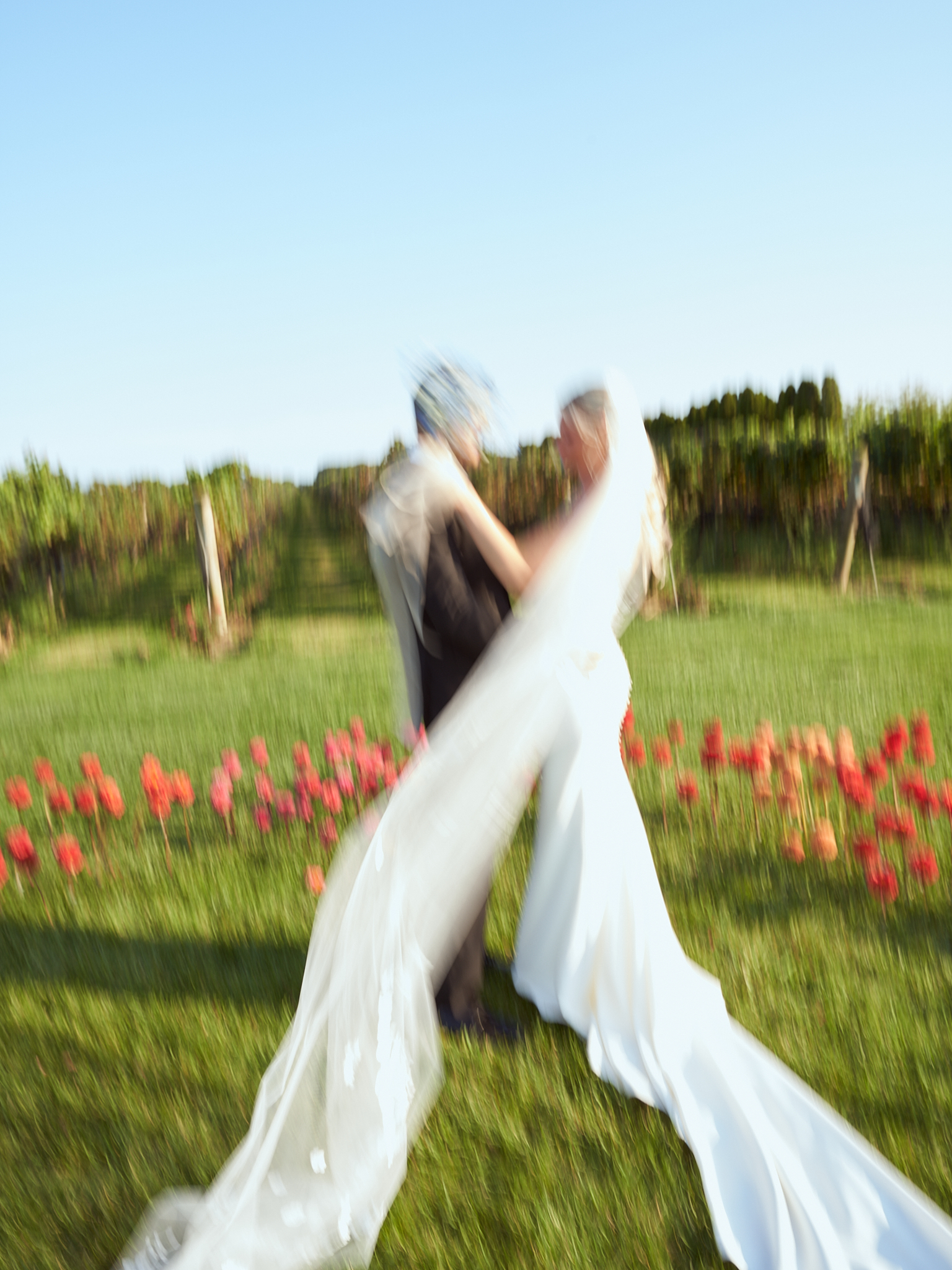
Walking Toward the Camera
I have them hold hands and walk toward me while looking at each other. The movement loosens the body, and their eye contact creates frames that feel alive rather than arranged. The best images often come from the moments just before they reach me.
Standing Poses That Photograph Well
When a couple stands side by side, small adjustments make a significant difference. A slight angle toward each other, weight shifted to one foot, hands relaxed rather than gripped. These details separate a natural frame from a stiff one.
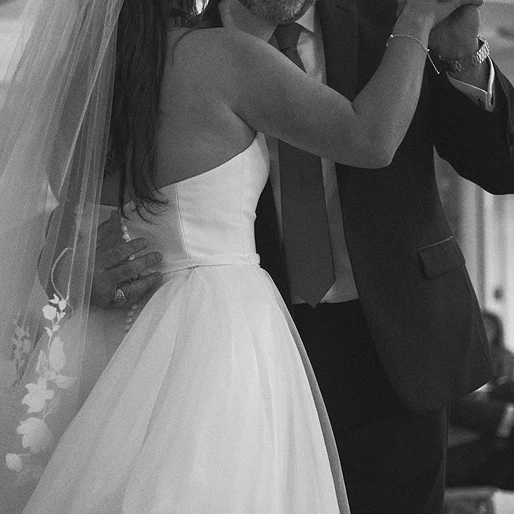
The Hold From Behind
One partner wraps their arms around the other from behind. The result is a frame that feels close and unguarded without requiring either person to perform anything. It is one of the more quietly effective wedding picture poses across different settings and lighting conditions.
The Forehead Touch
Both partners close their eyes and bring their foreheads together. There is no forced expression and no direction beyond the initial setup. What the camera captures in that moment is usually something neither of them planned.
Wedding Photography Poses for Bride and Groom
The formal bride-and-groom portrait session runs differently from the candid coverage during the wedding ceremony. It requires deliberate decisions about placement, composition, and pacing.
Composing the Formal Couple Portrait
I look for a background that provides context for the image without competing with the couple. Clean architecture, open landscape, or soft natural light all work consistently.
A strong wedding portrait idea starts with a clear visual hierarchy, and that begins with where people are placed in the frame.
Working With Height Differences
A significant height difference changes how I position a couple. I may bring them closer together physically, use natural elevation in the environment, or frame tighter to shift the visual balance.
The adjustment should be invisible in the final image.
When Stillness Says More Than Movement
Not every strong image comes from action. Some of the most honest frames, particularly in black and white, come from asking a couple to simply stand together and stop thinking about the camera.
What surfaces in those few seconds is usually worth more than a prompted reaction.
Wedding Photography Poses for the Bride
Bridal photography ideas work best when they reflect how the bride actually carries herself, not how she thinks she should look in photos.
Standing and Solo Frames That Feel Natural
Wedding photography poses for the bride work best when built around her natural posture and movement.
I ask her to look toward a window or adjust something on her dress. The action gives her something to focus on, and the frame captures who she is rather than a pose she is holding.
Working With the Dress, Veil, and Bouquet
The dress, veil, and bouquet shape practical bridal poses for pictures. A long train needs space to read properly in the frame.
A veil catches light differently depending on direction and proximity to a window. I work with these elements rather than around them.
Bridal Photography Ideas for Different Venues
A loft in Manhattan reads differently from a garden in New Jersey. I adjust bridal photography ideas to match the light, architecture, and scale of each space. What works in a cathedral does not always translate to a rooftop.
How I Direct Couples During the Wedding Photoshoot
Direction is what separates a wedding photoshoot that produces real images from one that produces uncomfortable ones. Most couples have never been photographed at this level before.
Movement Over Static Positions
I rarely ask a couple to hold still for long. Movement, even something as small as swaying or walking a few steps, relaxes the body and produces expressions that a static position cannot. The best frames often come between the directions, not during them.
Simple Prompts, Natural Reactions
I use plain, low-pressure prompts. Walk toward me. Tell them something they have not said yet today. The simpler the instruction, the more natural the response.
A couple reacting to something genuinely said is always more interesting than a couple performing an expression.
Helping Camera-Shy Couples Relax
Some couples arrive tense, particularly after the formality of the ring exchange. I move slowly, keep the conversation going, and start with the easiest setups first.
Comfort builds gradually, and the images reflect that shift from the first frame to the last.
Wedding Picture Poses for Groups and Families
Group shots require a different approach than couple portraits. The logistics matter as much as the posing, and the time window is almost always shorter than expected.
Organizing the Shot Without Losing Time
I work from a shot list agreed on before the wedding day, moving from the largest group to the smallest.
A designated person who knows the family moves people into position faster than any direction I can give. Ten minutes for group portraits passes quickly, and a plan is what makes that time work.
Posing Large Groups and Extended Family
With larger groups, I look for natural levels: steps, low walls, or slight elevation changes that let me see every face without stacking people unnaturally.
When people are physically closer than they feel natural, the frame almost always improves.
Balancing Formal and Candid in Group Shots
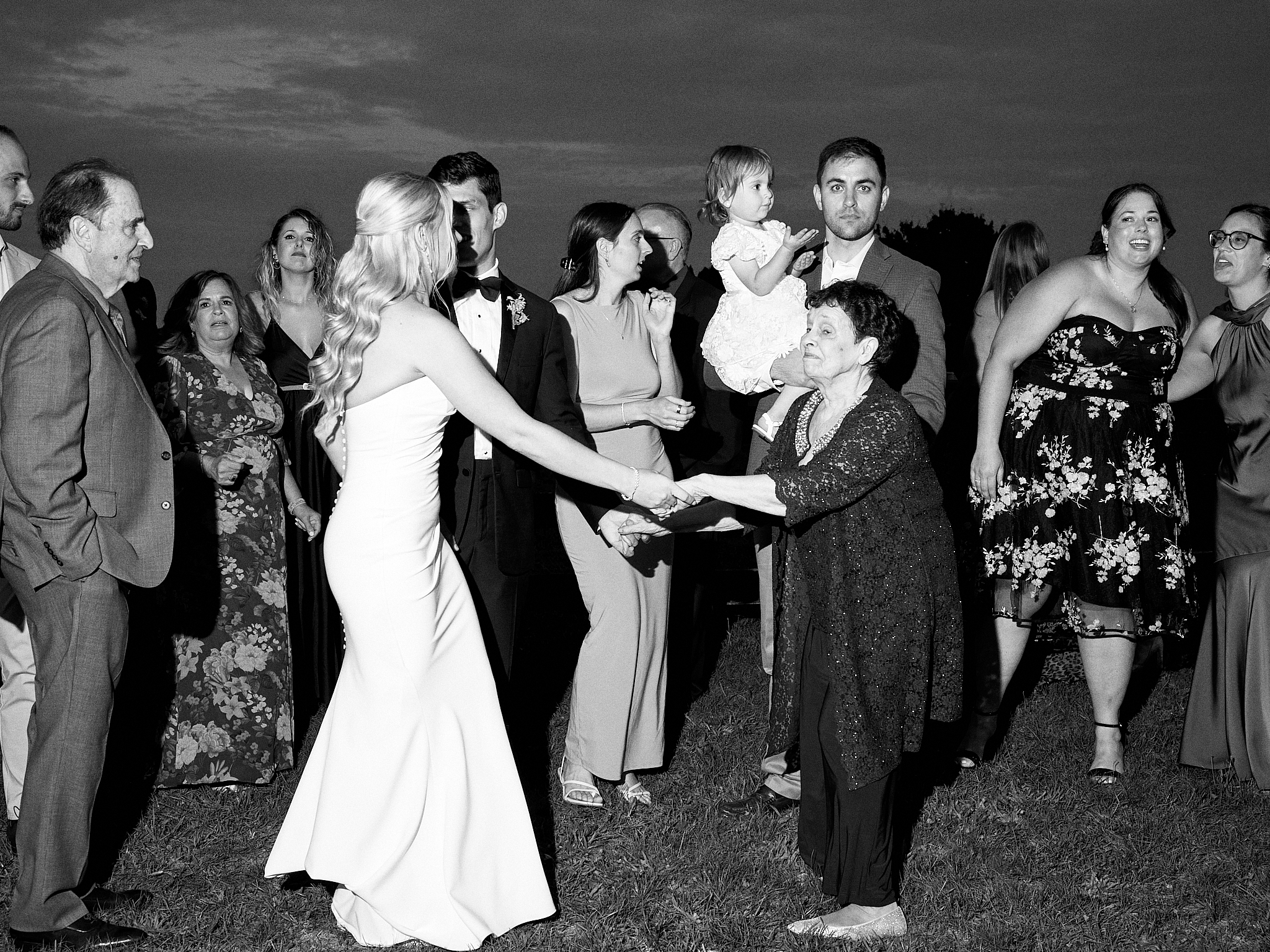
I take the clean version of every group shot first, then give the group a moment to relax and keep shooting. The frame right after the formal one is often the one that ends up on the wall.
Lighting and Timing for Better Wedding Portrait Ideas
Light determines what is possible in a portrait. Timing determines whether you get to use it.
These two factors shape every posing decision I make across a wedding day, from bridal frames during preparations to candid moments near the wedding cake at the reception.
Golden Hour: When to Shoot and Why It Matters
The hour before sunset produces directional, warm light that works across different skin tones and almost any location.
I build the wedding day timeline around protecting at least fifteen minutes in that window for couple portraits.
Overcast Light, Indoor Settings, and Low Light
Overcast days produce even, diffused light that is consistent and easy to work with. Indoors, I look for large windows and avoid mixing warm and cool light sources.
Some of the most cinematic frames I have made came from a dim reception hall and a single available light source.
When to Schedule Portraits: Before, After, and During
The most practical time for couple portraits is immediately after the ceremony, before the day’s energy shifts. Bridal portraits work well during preparations when the light is soft and the setting is personal. Group shots belong right after the ceremony, while everyone is still gathered.
Common Wedding Posing Mistakes and How to Avoid Them
Most posing problems come from tension, not from a lack of photogenic quality. Every couple of photographs is better when they are relaxed and guided with clear, low-pressure direction.
What Not to Do With Hands, Arms, and Posture
Gripped hands, arms pressed flat against the body, and squared shoulders are the most common issues I correct on a wedding day.
The fix is almost always the same: loosen the grip, create a small gap between the arm and torso, and shift the weight slightly to one side.
Avoiding Stiff or Unnatural Group Arrangements
Lining people up in a straight row produces a school photo, not a wedding portrait. I stagger positions slightly, bring people closer together than feels natural, and watch for crossed arms or turned bodies.
Giving a group a moment to settle before the final frame is almost always worth the extra few seconds.